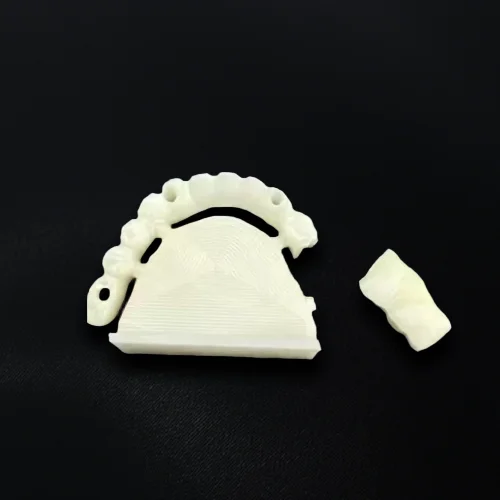

Dental zirconia blocks are widely used in CAD/CAM labs, but comparing different zirconia products is not always straightforward.
Labs often compare disc formats, shade workflows, strength ranges, translucency levels, and restoration indications when evaluating different materials.
This guide covers the main zirconia block types, common classification methods, and the material and workflow differences labs deal with in daily production.
What Are Dental Zirconia Blocks?
Dental zirconia blocks are pre-sintered ceramic materials used for CAD/CAM milling. They are available in different formats, including 98 mm open-system discs, system-compatible blanks, and smaller blocks for chairside or lab milling systems.
After milling, the restoration goes through sintering to reach its final density and mechanical properties. Dental zirconia is used for restorations such as crowns, bridges, veneers, implant-supported restorations, and full-arch cases.
Zirconia Blocks, Discs, and Blanks
In dental CAD/CAM, several terms are often used for zirconia milling materials:
- zirconia block
- zirconia disc
- zirconia blank
- zirconia puck
"Zirconia block" is often used as a broad category term, while a blank refers more generally to a millable zirconia form. A puck usually refers informally to a round zirconia disc.
For dental labs, the practical difference is compatibility. Before ordering, check the milling system, holder type, disc or block dimensions, and available thicknesses.
Why Zirconia Is Used in Dental CAD/CAM Labs
For dental labs, zirconia covers a broad range of restorative indications and fits well into established CAD/CAM workflows.
Unlike PFM restorations, zirconia does not require a metal framework, helping avoid metal-related esthetic limitations such as visible gray margins. Compared with glass ceramics, zirconia also offers a broader strength range for posterior crowns, bridges, implant-supported restorations, and full-arch cases.
Zirconia does not replace every ceramic material. Lithium disilicate and zirconia differ in strength, translucency, bonding behavior, and clinical indication. For a deeper comparison, read our guide to lithium disilicate vs zirconia block.
Main Types of Dental Zirconia Blocks
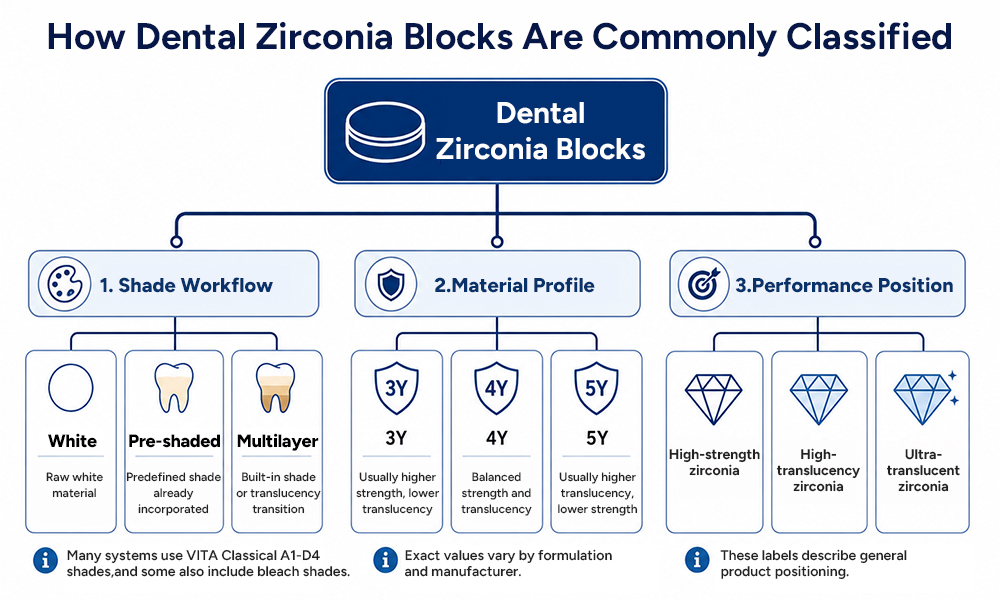
Dental zirconia blocks can be classified in several ways. For lab use, three practical categories are especially useful: shade workflow, yttria content, and strength-translucency position.
Shade Workflow: White, Pre-Shaded, and Multilayer Zirconia
White zirconia = raw white material with no built-in shade.
Pre-shaded zirconia = a base VITA shade already built into the material.
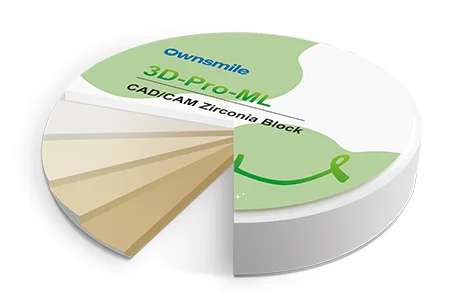
Multilayer zirconia = built-in transitions in shade, translucency, or both across the disc or block.
For a deeper look at shade transition, nesting position, and strength range, read the guide on multilayer zirconia shade and lab applications.
3Y, 4Y, and 5Y Zirconia: Material Profile
3Y zirconia = usually stronger, with lower translucency.
4Y zirconia = generally between 3Y and 5Y zirconia in strength and translucency.
5Y zirconia = usually higher translucency, with lower strength.
Strength and Translucency Position
Zirconia blocks are also often positioned by their balance between strength and translucency.
Common product positions include:
- High-strength zirconia
- High-translucency zirconia
- Ultra-translucent zirconia
These terms describe general product positioning. Actual strength, translucency, and indication ranges vary by product and manufacturer.
Understanding HT, ST, UT, and Other Zirconia Names
Many suppliers use names such as HT, ST, SHT, UT, ML, 3D, or 5D.
- HT = High Translucency
- ST = Super Translucency
- SHT = Super High Translucency
- UT = Ultra Translucency
- ML = Multilayer
- 3D / 5D = marketing names often used for gradient zirconia, usually related to shade, translucency, or strength transition
These names help describe product positioning, but they are not universal standards. One supplier's HT zirconia may differ from another in strength, translucency, or indication range.
A simple rule is useful:
Commercial names help describe the product position. The datasheet tells you whether it fits the case.
Strength and Translucency: The Main Trade-Off
Strength and translucency are two key performance factors in zirconia blocks.
Higher-strength zirconia is commonly used where bridge indication or mechanical safety margin matters more. For esthetic cases, translucency becomes more important, but the most translucent option is not automatically the right one.
Bridge indication, restoration design, shade requirements, and material properties still need to match the case.
Common Applications and Material Requirements
Different restorations place different demands on zirconia. The table below shows the main factors labs should check for common case types.
| Restoration Type | What Labs Should Check |
|---|---|
| Anterior crown | translucency, shade system, substrate shade, masking ability |
| Posterior crown | zirconia strength, minimum thickness, occlusal conditions |
| 3-unit bridge | anterior or posterior region, zirconia strength, connector dimensions |
| Long-span bridge | zirconia strength, number of units, connector dimensions, framework design |
| Full-arch restoration | zirconia strength, framework design, disc thickness |
| Implant-supported case | framework design, passive fit, implant interface |
These factors are a starting point. Labs should always confirm the approved indications, design requirements, and processing instructions for the specific zirconia material.
For product-level comparison, labs can review the Ownsmile zirconia blocks to compare available series, shades, sizes, strength ranges, and translucency levels.

After Material Selection: Nesting, Milling, and Sintering
Choosing the right zirconia block is only the first step. The final result also depends on how the restoration is nested, milled, and sintered.
Nesting affects material use and shade placement. In multilayer zirconia, restoration position can change how the shade and translucency transition appears after sintering.
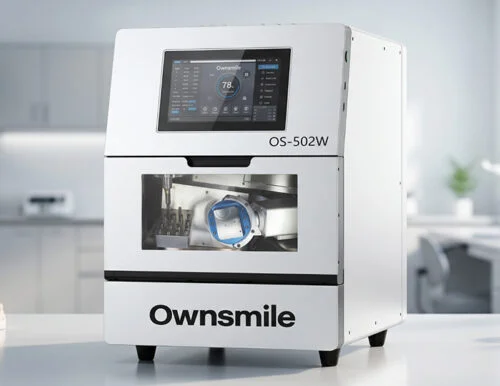
Milling affects fit, margin quality, and surface condition. Machine stability, CAM strategy, holding pin placement, and bur condition all matter. For more on machine types and milling workflows, see our dental milling machine guide.
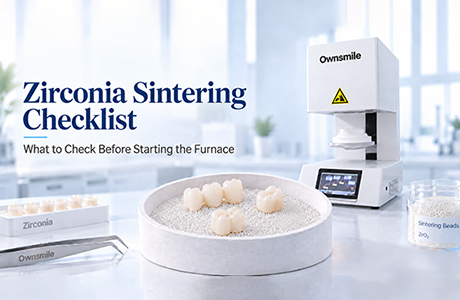
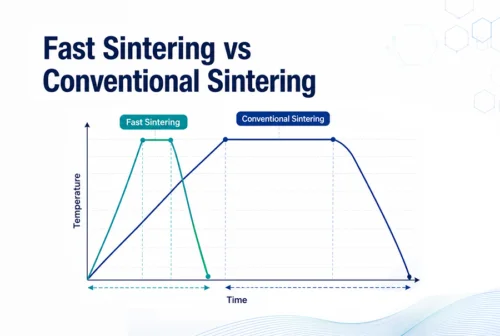
Sintering affects final density, strength, shade, translucency, and dimensional stability. Labs should choose between fast and conventional zirconia sintering according to the case: faster cycles can shorten turnaround time for suitable work, while conventional cycles leave a wider process margin for higher-risk restorations.
When cracks appear after sintering, the cause may lie in the design, milling process, support method, furnace settings, or cooling stage. Our zirconia crack troubleshooting guide reviews these causes step by step.
Where to Go Next
By this point, labs should have a clearer view of zirconia formats, shade workflows, material profiles, and common product naming.
The next step is to apply this foundation to real restoration cases and laboratory workflows.