
Dental Model Resin

Dental Model Resin is developed for LCD 3D printing of accurate dental models used across orthodontic, diagnostic, restorative, and prosthetic workflows. Available in three formulations, the range supports routine model production, higher mechanical performance, and precision-focused applications.

  • 385–405 nm
    Printing Wavelength
  • LCD
    Printing Technology
  • 3 Formulations
    For Different Model Workflows
Dental Model Resin Featured Image
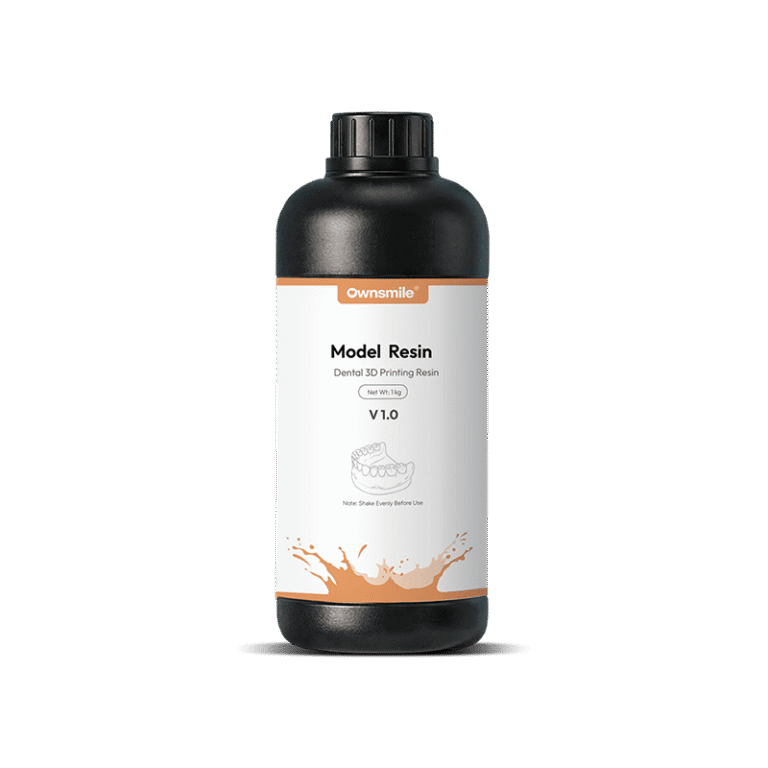
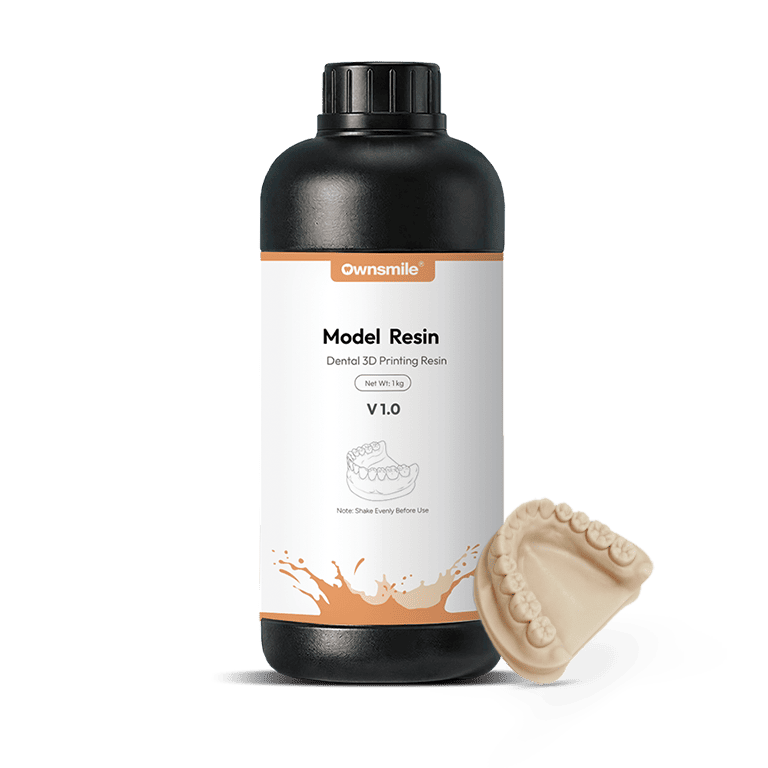
Dental model resin V1.0 for 3D printing dental models

Model Resin V1.0

For Routine Dental Model Production

A low-viscosity model resin for everyday dental model printing. It is suitable for orthodontic, diagnostic, and conventional prosthetic models, with easy cleaning and stable output for routine lab production.

Key Features

  • Low viscosity
  • Easy resin cleaning
  • Stable model output
  • Suitable for routine model production

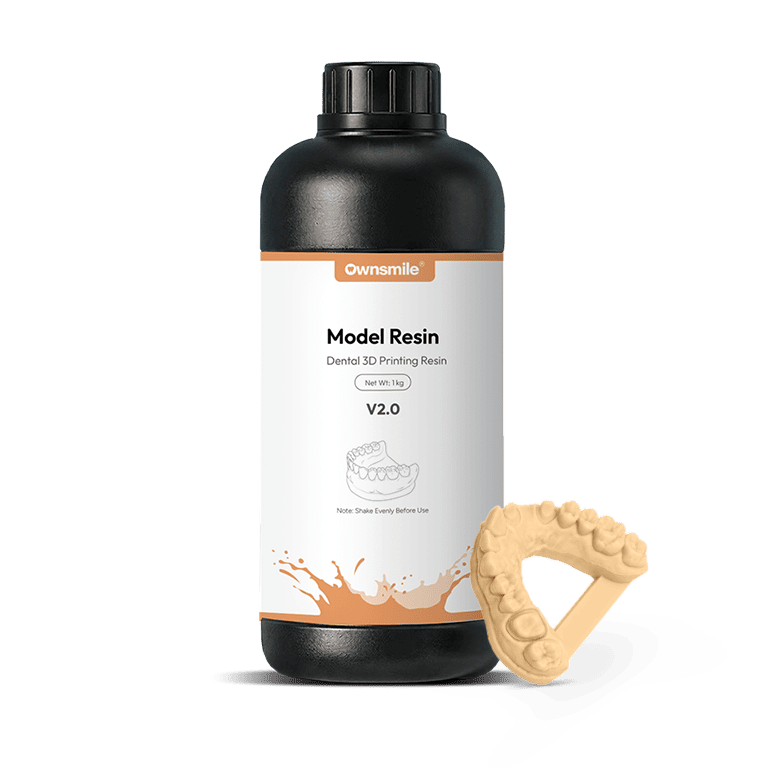
Model Resin V2.0

For Stronger Model Handling

Model Resin V2.0 is designed for dental models that require greater mechanical strength while maintaining smooth surfaces and accurate printed detail. It is suitable for routine orthodontic, diagnostic, and prosthetic model workflows.

Key Features

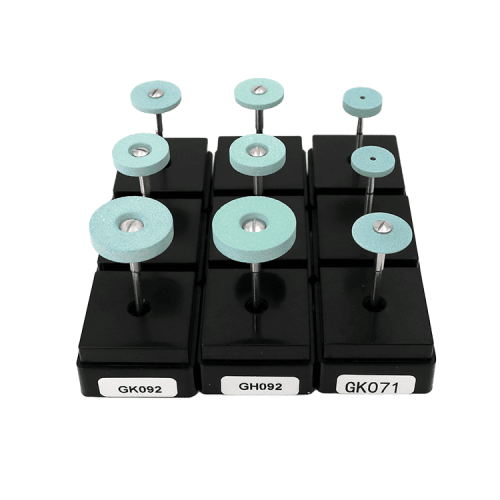
  • High speeds to efficiently perform a fine touch.
  • High performance with pure diamondgrit to ensure fine polishing.
  • Extremely long life-span
  • Cutting high strengthmetal sunc as zirconia.
Dental model resin V2.0 for 3D printing dental models

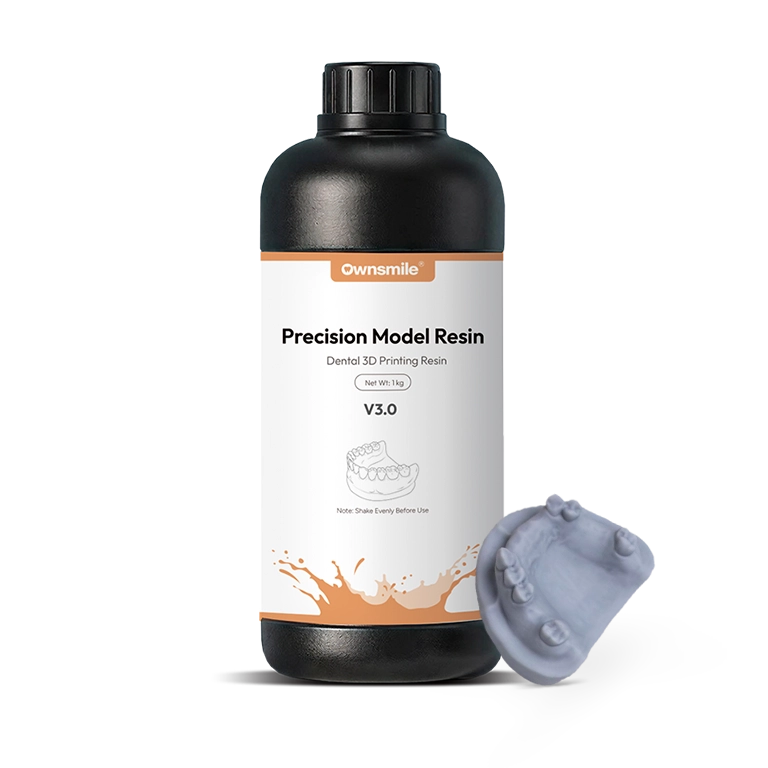
Precision Model Resin V3.0

For High-Precision Dental Models

Precision Model Resin V3.0 is developed for restorative and prosthetic model production where dimensional stability, printing precision, and surface detail are especially important. It is suitable for implant restoration models, complex prosthetic models, and esthetic restoration workflows.

Key Features

  • High printing precision
  • High dimensional stability
  • High surface hardness
  • Fine surface texture
Dental model resin V2.0 for 3D printing dental models

Technical Data

Compare the key properties of Model Resin V1.0, V2.0, and Precision Model Resin V3.0.

Property V1.0 Daily Model V2.0 Stronger Model V3.0 Precision Model
Viscosity @25°C 222 mPa·s / cP 259.3 mPa·s / cP 216.1 mPa·s / cP
Curing Wavelength 385–405 nm 385–405 nm 385–405 nm
Density 1.113 g/cm³ 1.056 g/cm³ 1.112 g/cm³
Available Colors Almond Yellow / Grey Grey / Yellow
Shore D Hardness 87 84 87
Tensile Strength 26.4–28.8 MPa 36.5–46.8 MPa 78.8–79.2 MPa
Flexural Strength 28.4–30.5 MPa 74.5–78.5 MPa 82.4–90.8 MPa
Flexural Modulus 590–654 MPa 2148–2334 MPa 1417–1992 MPa

Accurate Models for Different Dental Lab Applications 

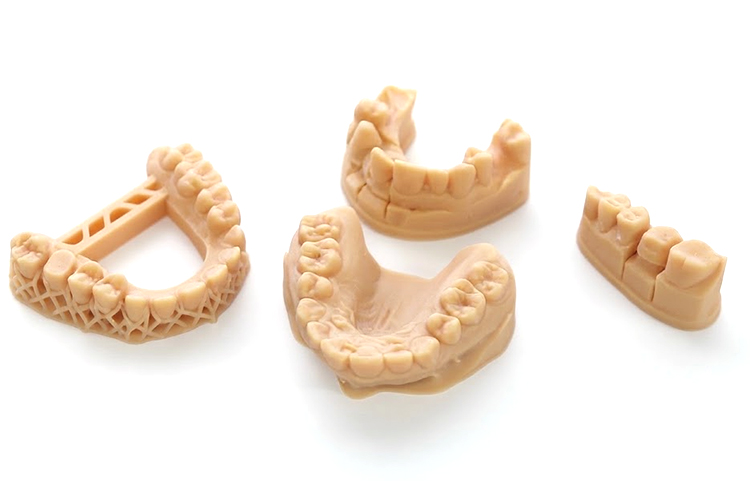
Dental models need clear anatomy, smooth surfaces, and reliable dimensional reproduction for daily laboratory work.

Ownsmile model resins are formulated to produce detailed model surfaces while supporting different accuracy and handling requirements. From routine orthodontic and diagnostic models to precision restorative and implant models, each formulation is designed around a specific level of model performance

3D printed dental models made with dental model resin

FAQs

Still have questions? Contact us directly. We’re here to help you find the perfect solution.

Contact Us
Can Ownsmile provide printing parameters?

Yes. Share your LCD printer model and resin version. Ownsmile can provide available printing parameters to support setup and testing.

Which 3D printers are compatible with Ownsmile Dental Model Resin?

The model resin range is formulated for compatible LCD 3D printers operating at 385–405 nm. Printing parameters should be matched to the printer model and selected resin.

What is the difference between Model Resin V1.0, V2.0, and V3.0?

V1.0 is designed for routine model production and easy handling. V2.0 provides higher mechanical strength for stronger model handling, while V3.0 focuses on high-precision applications requiring greater dimensional stability and fine surface detail.

What is dental model resin used for?

Dental model resin is used for 3D printing physical dental models for diagnostic, orthodontic, restorative, and prosthetic workflows. Different applications place different demands on accuracy, strength, dimensional stability, and surface detail.

Privacy Overview

This website uses cookies so that we can provide you with the best user experience possible. Cookie information is stored in your browser and performs functions such as recognising you when you return to our website and helping our team to understand which sections of the website you find most interesting and useful.